 |
|
|
|
|
|
|
|
|
|
|
|
 |
 |
 |
 |
 |
 |
 |
 |
 |
 |
 |
|
The
Jesus People Revival |
|||||||||
 |
 |
||||||||
| Chuck
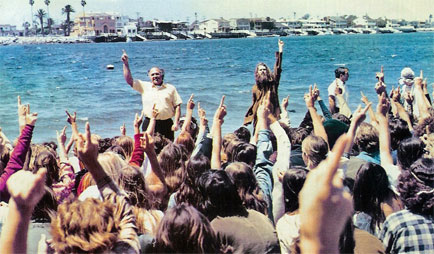
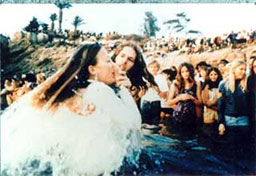
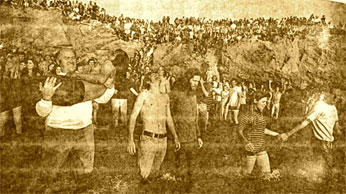
Smith and Lonnie Frisbee conduct a beach service and mass baptism at Corona Del Mar beach. |
Jesus People Revival Video: |
||||||||
A
Fresh Introduction regarding Lonnie Frisbee |
|||||||||
| Brothers,
consider your calling: not many are wise from a human perspective,
not many powerful, not many of noble birth. Instead, God has chosen
the world's foolish things to shame the wise, and God has chosen
the world's weak things to shame the strong. God has chosen the
world's insignificant and despised things —the things viewed
as nothing—so He might bring to nothing the things that
are viewed as something, so that no one can boast in His presence.
1 Corinthians 1:26-29 |
|||||||||
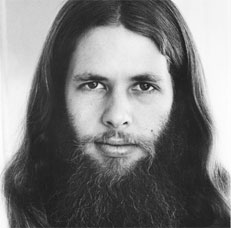
| There is a lot of interest in Lonnie Frisbee at the moment and rightly so. The Jesus Revolution movie portrays Lonnie as an evangelist that was used powerfully by the Lord in the Jesus People Revival , which indeed he was. In fact, Chuck Smith said: “Lonnie was the first evangelist of the Jesus People Revival.” And he remained the most notable evangelist of that revival as well. However, he didn’t fit the status quo of the typical American evangelist in any way whatsoever. He never did large fund-raising campaigns like most American evangelists are known for—in fact, he refused to even take up an offering afterwards when the Holy Spirit had moved—as he in no way wanted to prostitute nor pollute the work of the Holy Spirit! Our friend John Ruttkay said: “Lonnie was always actually very pure and ethical in this area regarding finances,” which is an area that has been pretty widely abused and misused throughout the Body of Christ and has been plagued by scandal by many evangelists in the not-too-distant past! Even though Lonnie was an admirer of Katherine Kuhlman and was impacted personally by her ministry and anointing, he didn’t copy her style, like playing soft piano music when he ministered or prayed for people. Instead, he insisted on being himself and staying “naturally supernatural” something he also sought to teach us personally when he was mentoring us, and we’re still in that learning curve of walking out so much of what he imparted and shared with us. Lonnie was unlike the typical American evangelists in pretty much every way. Instead of the usual three-piece suit donned by many American evangelists of that era, Lonnie wore his hippie garb accompanied in his early days by a deerskin cape that had a picture of Jesus drawn on the back—some say it was actually a picture of Lonnie made to look like Jesus—it’s debatable! In those early days of his ministry, he used to throw his cape over those he prayed for who were overcome by the power of the Holy Spirit and fell to the floor, and he’d cover them with his cape. He was glad when they got touched by the Holy Spirit and sometimes exclaimed: “Oh yeah, the ministry is getting good!” Other leaders would sometimes cringe uneasily at Lonnie’s Pentecostal and Charismatic enthusiasm, but instead of making him cool things down, it egged him on even more due to that bit of hippy counterculture rebelliousness he still carried. “Gotta let the old dudes know I’m not into conformity.” People getting slain in the Spirit was one aspect of his ministry imparted from Katherine Kuhlman, where those touched and overcome by the Spirit in her meetings would sometimes fall over. Lonnie would laugh while reflecting back on these events, and share insights on the ups and downs he went through in his years of ministry, as we sat and listened to him share his stories. We were blessed to hang out with him during his latter period of life after his time as the catalytic revivalist in both Calvary and the Vineyard. During the time we got to spend with him, he was basically organically mentoring and discipling us. My wife Mercedes and myself, and some others, were blessed to hang around with him during the last three and a half years of his life. It was an important time helping us prepare for our own ministry later, as Lonnie shared and dispensed lots of wisdom and insight and impartation unto us. Reflecting on it later, I was thinking what an awesome privilege it was, in spite of some of the persecution it cost us at times. And how cool is that! It worked out to be a biblical measure of time like with Jesus mentoring his own disciples. |
|||||||||
|
There have been many publications looking back on the “The Summer of Love” a couple of years ago, as it was its 50-year anniversary. The Summer of Love marked the Hippie Movement as something that had left the fringes and permeated and entered into mainstream society in American culture back then. Right in the middle of the cultural milieu that was the Hippie Movement, where young people were dropping out of mainstream society to seek something deeper but instead found dead ends in free love and drugs, God brought forth one of the biggest revivals in modern American history. In Retrospect: The end of Lonnie’s life We were there for the end of Lonnie’s life and it was very redemptive. The mysterious ways of the Lord who somehow turns a cruel crucifixion into eternal salvation, for those who will simply believe, never ceases. Likewise, that mysterious grace never ceased working in Lonnie’s situation, not even in the lowest moments. Elijah the Old Testament prophet is a good reference point in this. Elijah was used powerfully by God in many ways and experienced a great victory in defeating the false prophets of Baal. Yet, shortly after this victory, he falls into a complete spiritual and emotional tailspin when the demonic spiritual warfare from Jezebel’s threats against the Lord’s anointed overcome him. While on his way from Beersheba to Horeb, Elijah spiritually and emotionally crashes and falls into fear and becomes self-destructive and suicidal and starts praying for the Lord to take his life (1Kings 19:1-5). Elijah was restored, by the mercy of the Lord, but was given a new task now: The preparing and anointing of the next generation who will go on after him and minister. He still continued to minister but must also prepare others now. Likewise, Lonnie came into an emotional and spiritual crisis and became self-destructive and was overcome by the darkness and the bitterness that began eating away at his soul, this after some great victories in the Body of Christ, having been the Lord’s catalytic minister for two great revivals that gave rise to both the Calvary Chapel and Vineyard movements, along with doing so much mission work overseas and other ministry over the years as well. He stumbled but God restored him, and Lonnie refocused with the new task of preparing those who would minister after he was gone. Just because it wasn’t in the headlines doesn’t mean he didn’t continue on with the will of God after his stumbles, in fact Lonnie kept doing lots of ministry until the very end. Like Elijah after some of his greatest victories, Lonnie also stumbled as the darkness snuck its way in. He started becoming bitter towards the people and movements who he had been used by the Lord to impact so vitally. Lonnie said he felt that they failed to acknowledge the impact his ministry had on them. Whatever rationalizations one might use to eliminate someone from their history, we must remember that the Bible never removes a single character out of its pages because they had flaws, or weaknesses , or stumbled. Just think of Jonah, Elijah, or Sampson, just to name a few! You know it could be that we are all weak and fleshly sometimes, leaders and lay people alike, and all of us are saved only by grace, and all of us make mistakes. Billy Graham was the only minister to go and visit the infamously defrocked televangelist Jim Bakker in prison who fell due to a financial and moral scandal. When asked in an interview why he went, Graham said: “Because I understand the weakness of our still remaining sinful nature and the corruption of our broken fallen flesh even as born again believers. Except for the grace of God there go I.” Unfortunately, Lonnie let bitterness get into his heart; he already had wounds of rejection and other issues he had never dealt with, like being beaten mercilessly by his father early on and being molested as a young boy by a male babysitter. But he had never dealt with these issues, until the last few years of his life that is, because he said that there was no way, nor safe place, for him to do so. Furthermore, he said that he realized later that he was around people from a generation whose way of dealing with this stuff was to bury it and sweep it under the rug. After some stumbles along the way, Lonnie came into a very healing and redemptive time in the last few years of his life and began experiencing inner healing and processing his issues, including asking forgiveness and extending forgiveness to those he felt had hurt him. Lonnie had garnered important lessons out of his time of being used in revivals, as well as his struggles, and he was excited to share his insights with us. We learned lessons from both his blessings and victories as well as his struggles and stumbles. There is an old saying: “You often learn more from the struggles and stumbles than the victories.” Lonnie regularly reminded us personally: “Do not let bitterness get a hold of your heart. If it does, bring it to the Lord and let him do a work of healing in your life. I did not, and I let the bitterness fester, then the weakness of the flesh—our broken sinful nature—rose up and caught me unaware, and the darkness suddenly swept in and pulled me down and I stumbled, it cost me dearly!” However, after a short time licking his wounds while out in the wilderness, he returned to the Lord and repented. He re-embraced his calling with force and a new focus and honed in to his calling like a laser (more on that another time). He became committed to just one thing: to spend the rest of his time here on earth doing God’s will, every day, for the rest of his life. He had a paradigm shift due to the crisis he had experienced and did not care any longer about fame, money, the size of meetings, nor popularity. Lonnie said, “These things are so fleeting and so superficial and yet we in the Body of Christ get so easily caught up and enamored with this nonsense. These things are so worldly, yet we believers so foolishly hold them in such esteem, to the consternation of the Lord.” He regularly said: “The size of meetings does not matter to me anymore. It’s all about doing God’s will.” Then, with a loud shout in his delivery to make the point as strong as possible, he’d declare: “Never drop the will of God! I did and it cost me. Never, ever, let go of God’s will for your life!” Amongst a few other things, he felt he must now pour into those who God had gathered around him to prepare them, as those who would continue on after he passed, with their own ministries. We were blessed through a series of divine appointments to connect with Lonnie during this time. For me, Bryan, it was actually a reconnection: I had first encountered him in my early days at Calvary Chapel Costa Mesa when he was on his second stint there after coming back from Florida, and then later at a Bible study in Orange where he first prayed for me. Soon after, I was radically baptized in the power of the Holy Spirit at Calvary Chapel Yorba Linda, when Lonnie prayed for me in the back room in their meeting place at the Canyon High School Gym. God connected me and my wife Mercedes to Lonnie personally, through a series of divine appointments, into a time of blessed friendship in his last years. We were hanging out with Lonnie and attending his meetings and retreats and conferences and going on ministry trips, which turned into an organic time of discipleship and mentoring for us. There were also a handful of others who had been drawn to him. We all became friends and hung out together, as well as becoming his ragtag assistance crew, helping him out with things during that time. Some of those I remember were: Eric Janssen, David Sloane, Dennis Evans, Steve Zarit, Stan Frisbee, Roger and Roxanne Sachs, James Keough-Gore and Maureen Gore, Darrell and Evie Ballman, Heidi Halsall, and Sid Smith, amongst others, whose names may have escaped me for the moment (sorry if I forgot to mention someone…) In this unique time of organic discipling and mentoring that lasted roughly three and a half years, Lonnie shared wisdom and insight from his ministry years and experiences, and prayed, prophesied, and imparted many things to us that set the course for our own lives and ministry! Lonnie kept doing regular ongoing meetings until the end, many in conjunction with Set Free and Freedom Crusade which were also called “Righteous Parties"by Set Free. At these meetings he preached, taught from the Bible, shared lessons from his years in ministry, as well as sharing lots of Holy Ghost stories. There was all kinds of other ministry that he did in those last three and a half years including some ministry trips we took with him. Lonnie also was doing regular retreats and conferences out in Palm Springs, including occasional hikes up Tahquitz Canyon, where he had his first radical supernatural encounter with Jesus and the revelation of his ministry to come back in his hippie days. In fact, Lonnie and I were hiking up the Canyon one day, at one of his retreats, and had a radical divine encounter as we both found two different pieces of the same Bible laying in the sand. I ended up getting a face full of sand when Lonnie started prophesying over me when I found the second part of the Bible shortly after he found the first half, and I fell under the power of the Holy Spirit. Later on, I listened in closely when Lonnie was in his final days, when he picked up his Bible and quoted from Paul, applying it to himself shortly before he passed away: “I’ve run the race, I have finished the course, I’ve done everything God has called me to do. I’m satisfied that I have done the will of God with all of the life that I had left in me.” I thought “Wow! How many can say that so confidently right before they die…?” His life did not end tragically but triumphantly. I had the honor of being a pallbearer at his funeral. While helping carry his casket into a packed Crystal Cathedral, I thought: Man, Lonnie did more in one short lifetime: ministry, revivals, missionary work, catalytic involvement in two major movements, and on and on, more than most people could even think to do if they were given five lives to live.
We have this treasure in jars of clay that it may become evident that this all surpassing power is from God and not from us. 2 Cor 4:7 Check out a few special words from our friends as well as a propetic endorsement from our mutual friend of Lonnie's, Pastor David Sloane. Some points of interest in Lonnie Frisbee’s role in the birth of the Jesus People Revival and the Third Wave Revival
|
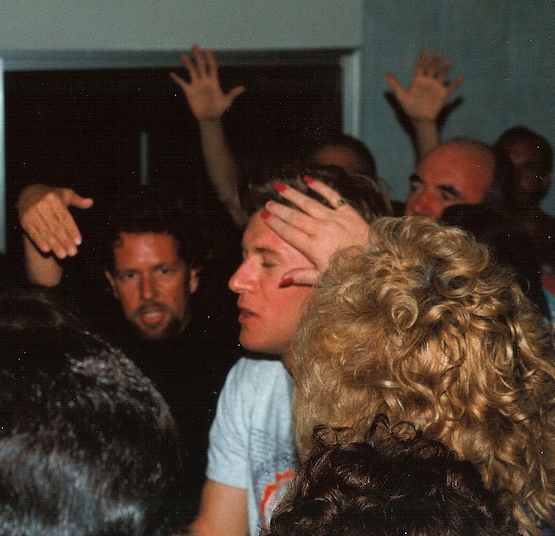 Lonnie and Jill praying for Bryan Marleaux Some important moments in my journey:
Acid Trippers and Hippie Crash Pads
Outpouring in the High School Gym
Hiking with the Frizz leads to a divine encounter
Bryan shares about his journey of coming to Christ and being filled with the Holy Spirit.
Roger Sachs' recent books on Lonnie Frisbee as well as other books. Check out this link to have a look. 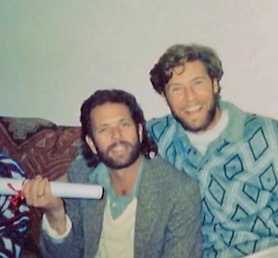 Lonnie and Bryan getting in a picture whie hanging out at a house meeting where Lonnie talked about carrying on with all that the Lord imparted in these meetings: Keep your eyes on the prize! A
Quick Biblical Grid |
||||||||
 |
 |
 |
|||||||
 |
 |
 |
|||||||
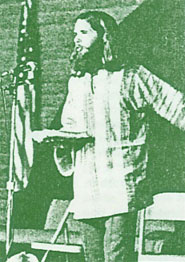
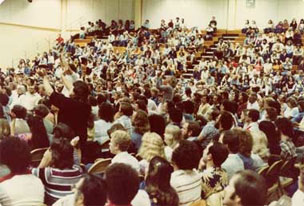
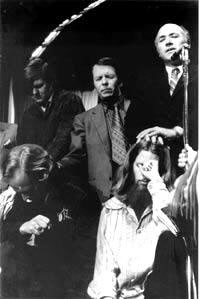
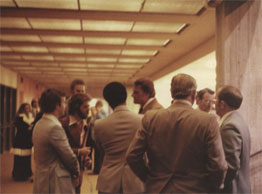
| Clockwise,
from top left: Lonnie baptizing a young girl at Corona Del Mar
beach. Preaching at Calvary Chapel Costa Mesa -Photo from Life
Magazine. Calvary Chapel Yorba Linda meeting at Canyon High School
Gym which later became known as the Anaheim Vineyard. Lonnie meeting
Billy Graham. Chuck Smith praying over Lonnie. Mass Baptism at
Corona Del Mar Beach with Lonnie and Chuck leading the service. |
|||||||||